
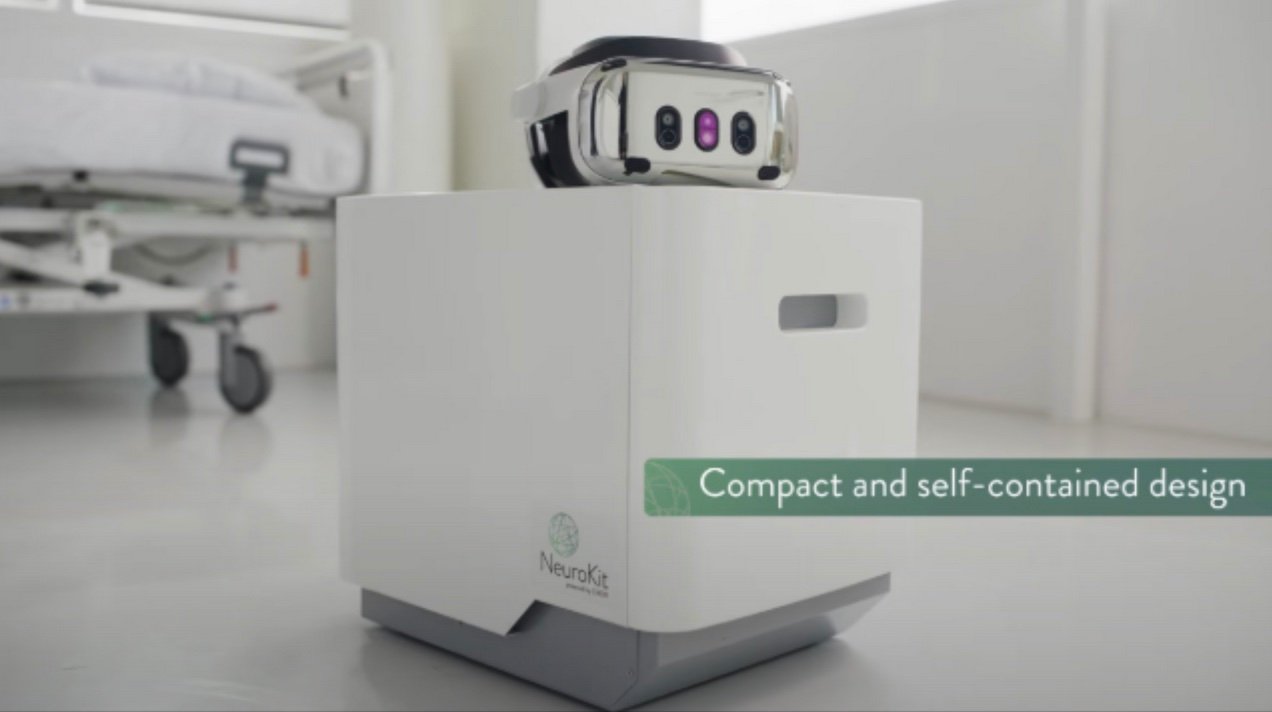
We would not have guessed a casual conversation between mutual connections could lead to an impactful breakthrough.
From a conversation to the NeuroKit
CHDR’s NeuroCart technology has been a huge success for conducting central nervous system (CNS) tests. However, the usability of the NeuroCart is often constrained by its on-site immobility. That is when DashXR and CHDR came across each other through our mutual connections. Combining DashXR’s expertise in extended reality and CHDR’s expertise in pharmaceutical technology, our collaboration led to the development of a self-contained and portable version of the NeuroCart technology, labelled as the NeuroKit.
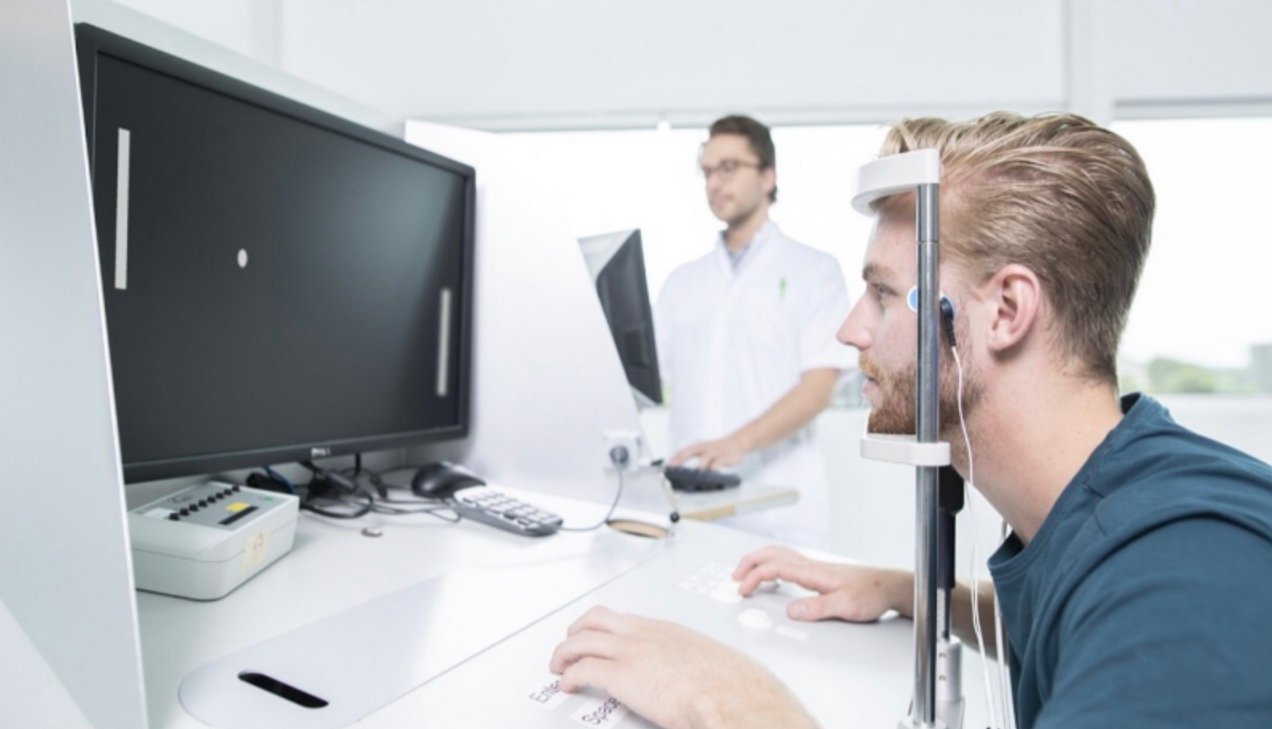
The original NeuroCart setup: accurate, but tied to one location. Image: CHDR.
Eye-tracking at a stable high frequency
From the consultancy sessions, we identified the need to retrieve eye-tracking data at a stable high frequency for accurate CNS testing results. With this in consideration, we proposed the use of the Varjo XR-4, a high-end, industry-grade XR headset capable of collecting eye-tracking data at high frequency.
Implementing eye-tracking data collection in an XR application is nothing new for DashXR. However, achieving a consistent data output at a constant rate of at least 90 Hz was more difficult than we had imagined. The bottleneck in our case was the limitation of Unreal Engine’s single-threaded main game loop.
Nonetheless, we persevered and devised the following strategies to overcome the challenge:
- Setting a fixed frame rate within the Unreal Engine project.
- Optimizing how the eye-tracking data is processed.
- Decoupling the eye-tracking data collection from the Unreal Engine environment.
Through multiple iterations of trial and error, we successfully achieved the desired outcome. By combining Varjo’s Native API with several other C++ libraries, we created an efficient, interconnected data exchange system under the hood, using the Varjo XR-4’s eye-tracking system to its full capacity at a constant rate of 200 Hz.
A working product in clinical studies
Now in 2026, the NeuroKit is still actively in operation as a working product. Its success has also been recognized and used in clinical studies globally. This collaborative work with CHDR is an encouraging testimony for DashXR to continue striving for a collaborative approach with our partners in every project.
There’s no such thing as a stupid question. No idea is ever too small to belittle. Together, we can overcome any challenge and build a future beyond expectation.
Have you got an innovative idea that you’d like to bring to life? Get in touch with us.